How Do Rotary Slitter Blades Work for Metal Slitting?
Quick Answer
Rotary slitter blades work by using an upper and lower circular blade set to shear metal coils into narrower strips. In metal slitting, the final cutting result is not decided by blade sharpness alone. Blade clearance, knife overlap, blade material, hardness, thickness tolerance, flatness, parallelism and surface finish all affect burrs, edge quality, slitting width stability and blade wear.
What Are Rotary Slitter Blades in Metal Slitting?
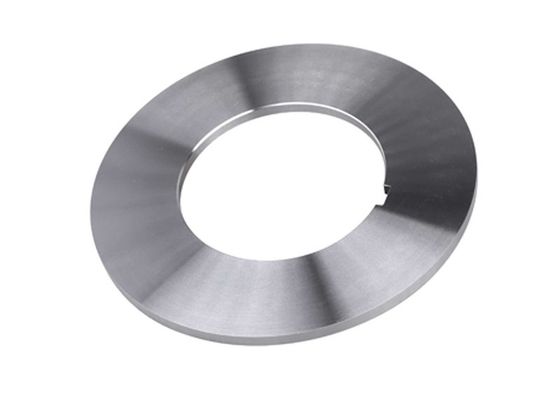
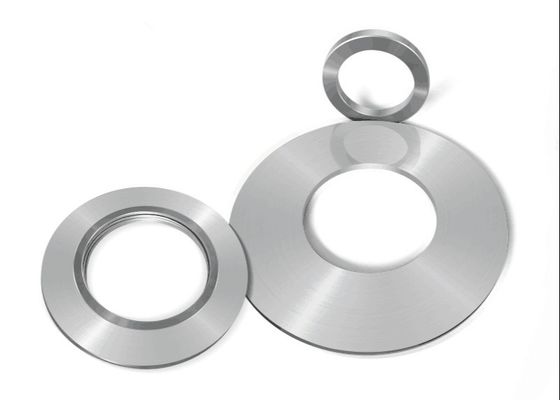
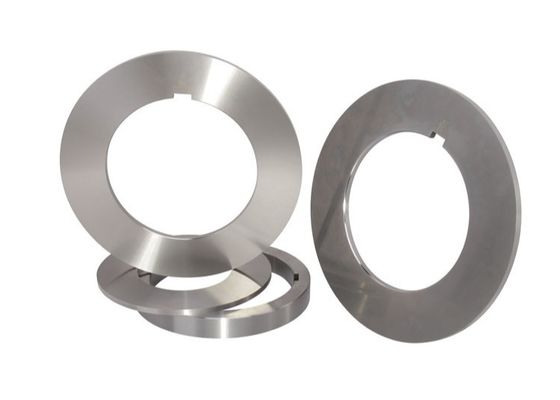
Rotary slitter blades are circular cutting blades used in metal slitting lines. If you are processing steel coils, stainless steel coils, aluminum foil, copper strip or precision metal strips, these blades are often one of the key cutting tools in the slitting process.
You may also see them called:
- Rotary slitting knives
- Circular slitting knives
- Circular slitter blades
- Metal slitting blades
- Slitter knives
- Rotary shear blades
The exact name may vary by region, machine type or supplier. But in metal slitting applications, these terms usually refer to circular blades used to slit wide metal coils into narrower strips.
In this article, we are only talking about rotary slitter blades for metal slitting. We are not discussing slitting blades for paper, plastic film, flexible packaging, food processing or woodworking.
How Upper and Lower Rotary Slitter Blades Cut Metal Coils
During metal slitting, your metal coil passes continuously between the upper and lower rotary blades. These two circular blades form a shearing area and cut the wide coil into narrower metal strips.
Rotary slitter blades do not work like saw blades. They do not remove material by sawing through the coil. Instead, they work through a continuous shearing action. The upper and lower blades need to be positioned correctly so the metal strip can be separated cleanly as it passes through the cutting area.
This process looks simple, but your final cutting result depends on several factors:
- Whether the upper and lower blades are positioned correctly;
- Whether the blade clearance is suitable;
- Whether the knife overlap is stable;
- Whether the blade thickness tolerance is consistent;
- Whether blade flatness and parallelism are controlled;
- Whether your coil thickness, hardness and surface condition match the blade design.
If these factors are not matched properly, even new blades may still give you burrs, width variation, edge deformation or abnormal blade wear.
Why Blade Clearance Matters in Metal Slitting
Blade clearance is the side gap between the upper and lower slitter blades. It is one of the most important settings in metal slitting.
If the clearance is too large, your metal may stretch or tear before it is fully sheared. This can lead to:
- Slitting burrs;
- Edge burrs;
- Rough cutting edges;
- Poor edge quality;
- Edge deformation.
If the clearance is too small, the contact pressure between the upper and lower blades may become too high. This can increase the risk of:
- Fast blade wear;
- Blade heating;
- Edge chipping;
- Abnormal blade load.
There is no single clearance value that fits every metal slitting application. Suitable blade clearance depends on your material type, coil thickness, hardness, slitting speed, machine condition and edge quality requirements.
For example, if you are slitting stainless steel, carbon steel, aluminum foil or copper strip, the required clearance may be different because the thickness, hardness and ductility of each material are different. So when you ask for rotary slitter blades, it is better to tell your supplier what material you cut, the material thickness and the edge quality you expect.
How Knife Overlap Affects Slitting Stability
Knife overlap refers to the vertical engagement between the upper and lower rotary blades. It affects whether your metal strip can be cut consistently and completely.
If the overlap is not enough, the material may not be sheared in a stable way. This can cause:
- Unstable slitting;
- Incomplete cutting;
- Uneven edges;
- Poor slitting accuracy.
If the overlap is too large, the blade load may increase. This can lead to:
- Fast blade wear;
- Higher cutting resistance;
- Edge chipping;
- Shorter blade life.
Knife overlap becomes more sensitive when you are working with high-speed metal slitting, precision strip slitting or ultra-thin metal slitting. The higher your line speed, the thinner your material or the tighter your width tolerance, the more important stable blade matching becomes.
That is why rotary slitter blade performance should not be judged by the blade alone. You also need to check how the blades are set up in your slitting line.
How Material and Hardness Influence Rotary Slitter Blade Performance
Blade material and hardness affect wear resistance, edge retention, chipping risk and service life.
Common materials for rotary slitter blades include:
- D2 tool steel
- SKD11 tool steel
- Cr12MoV
- M2 high speed steel
- HSS
- Tungsten carbide
Different materials suit different working conditions. D2, SKD11 and Cr12MoV are commonly used in many metal slitting applications. M2 and HSS may be selected when you need better edge retention, high-speed cutting performance or stronger wear resistance. Tungsten carbide is often considered for high-wear, high-precision or thin material slitting applications.
However, this does not mean one material is always the best choice.
The right material should be selected according to:
- The material you are slitting;
- Your coil thickness;
- Your coil hardness;
- Your slitting speed;
- Your edge quality requirements;
- Current problems such as burrs, edge chipping or fast blade wear.
If the blade material is not suitable for your application, the blade may wear too quickly. If hardness and toughness are not balanced for your working condition, the risk of chipping or cracking may increase.
Why Flatness, Parallelism and Surface Finish Affect Edge Quality
Besides material and hardness, blade manufacturing accuracy also affects your actual slitting performance.
Flatness
Flatness affects how stable the blade face is during cutting. If blade flatness is not controlled, contact may become uneven during slitting, which can affect your edge quality and slitting stability.
Parallelism
Parallelism affects clearance consistency between the upper and lower blades. If blade parallelism is poor, clearance may be too large in some areas and too small in others. This can lead to edge burrs, width variation or uneven cutting edges.
Thickness Tolerance
Thickness tolerance affects knife stack setup and final strip width. If blade thickness tolerance is unstable, your actual slit width after stacking may be different from the expected width.
Surface Finish
Surface finish and cutting edge condition affect edge quality. If you are slitting stainless steel, aluminum foil or precision strip steel, blade surface finish, edge condition and face quality can be more sensitive.
This is why you should not only check blade material. Tolerance, flatness, parallelism, surface finish and your actual slitting conditions are also important.
Common Problems When Rotary Slitter Blades Are Not Matched Properly
In metal slitting, many cutting problems are not caused by one single factor. Blade material, edge condition, clearance, overlap, machine condition and tooling setup can all affect your final result.
|
Common Problem
|
Possible Related Factors
|
| Slitting burrs |
Blade clearance, edge condition, blade wear, material hardness |
| Poor edge quality |
Knife overlap, surface finish, blade flatness, cutting edge condition |
| Width variation |
Thickness tolerance, knife spacing, tooling alignment |
| Fast blade wear |
Material selection, hardness, clearance, cutting material |
| Edge chipping |
Hardness, toughness, excessive load, improper overlap |
| Surface scratches |
Blade surface condition, strip support, machine setup |
If you install new blades but the cutting result is still unstable, it does not always mean the blades themselves are the only problem. You may also need to check blade clearance, knife overlap, knife stack setup, arbor condition and the material you are slitting.
This is what makes metal slitting more complex than simple cutting. Rotary slitter blades are key cutting parts, but they must work under the right conditions and setup.
What You Should Check Before Ordering Rotary Slitter Blades
If you are buying rotary slitter blades for the first time, or if you are a trader helping your customer confirm requirements, it is better not to send only a product name to the supplier.
To help your supplier select suitable material, hardness, tolerance and processing requirements, you should provide:
- Blade drawing;
- Outer diameter;
- Inner diameter;
- Blade thickness;
- Material to be slit;
- Coil thickness;
- Coil hardness;
- Required strip width;
- Machine model;
- Current cutting problem;
- Required tolerance;
- Edge quality requirement;
- Line speed if available.
For example, if you are slitting stainless steel coil and you are facing edge burrs or fast blade wear, your supplier needs more than the blade name. It is better to provide your coil thickness, material hardness, line speed, blade dimensions and current blade material. With this information, the supplier can better judge whether the problem may come from material selection, blade clearance, blade wear or machine setup.
Complete inquiry information can reduce repeated communication and help your supplier give recommendations that are closer to your real working condition.
Rotary Slitter Blades for Metal Slitting Applications
For metal coil slitting, suitable rotary slitter blades need to match your coil material, thickness, hardness, blade size, tolerance and actual cutting problems.
If you are comparing rotary slitter blades for metal slitting, you can review SENDA’s Rotary Slitter Blades page for blade options used in steel coil, stainless steel, aluminum foil and other metal slitting applications.
The point is not simply to choose the hardest blade or the sharpest blade. A better choice should match your material, machine, slit width and current cutting problem.
FAQ
Are Rotary Slitter Blades the same as Circular Slitting Knives?
In many metal slitting applications, these terms are used to describe similar circular cutting blades. The name may vary by region, machine maker or supplier, but they are usually related to circular knives used for metal coil slitting.
How do Rotary Slitter Blades cut metal coils?
They cut by using an upper and lower circular blade set to form a shearing area. As your metal coil passes through the knife set, it is continuously slit into narrower strips.
Why do burrs appear after metal slitting?
Burrs may be related to blade clearance, knife overlap, blade wear, cutting edge condition, material hardness and machine setup. They are not always caused by the blade alone.
Can new Rotary Slitter Blades still cause poor edge quality?
Yes. Even when the blades are new, poor edge quality may still appear if clearance, overlap, knife stack setup, machine condition or material matching is not suitable for your application.
What information should I provide before ordering Rotary Slitter Blades?
It is better to provide blade drawings, outer diameter, inner diameter, thickness, material to be slit, coil thickness, hardness, machine model, required strip width, tolerance requirements and current cutting problems.
Conclusion
Rotary slitter blades work in metal slitting by using upper and lower circular blades to create a continuous shearing action. Their performance is not decided by sharpness alone. Blade clearance, knife overlap, material, hardness, thickness tolerance, flatness, parallelism and surface finish all affect edge quality, burrs, width stability and blade wear.
If you are facing burrs, poor edge quality, width variation or fast blade wear in metal slitting, it is better to check both blade condition and actual setup. For buyers, traders and production managers, providing complete drawings, dimensions, material details, coil thickness, machine information and current cutting problems can help your supplier recommend more suitable rotary slitter blades.


 Your message must be between 20-3,000 characters!