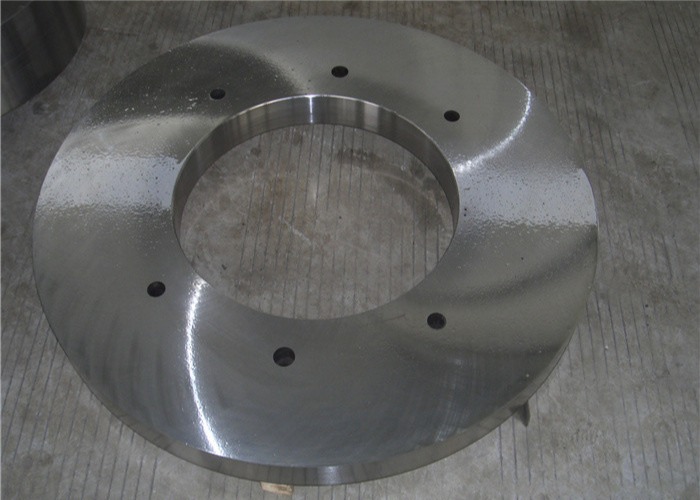
Core Capabilities
- Custom manufacturing from drawings, samples, existing blades, or basic dimensions
- Material selection support based on stainless steel and actual slitting conditions
- Precision determined according to blade diameter, thickness, and structure
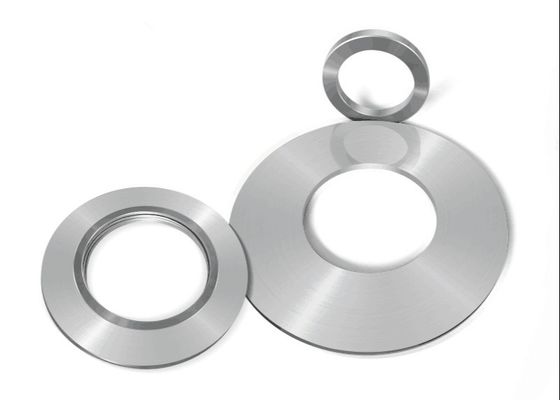
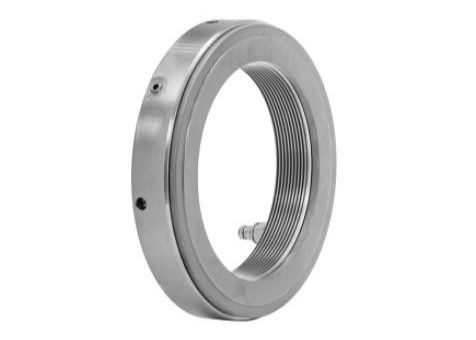
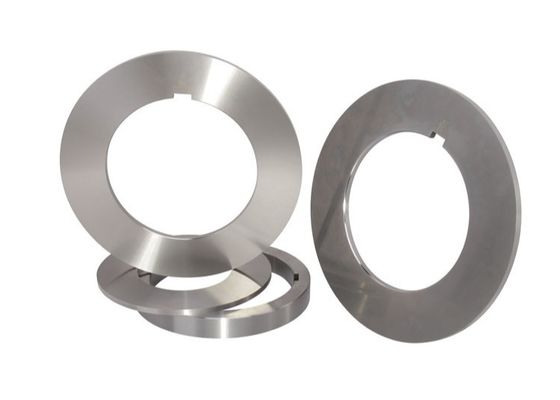
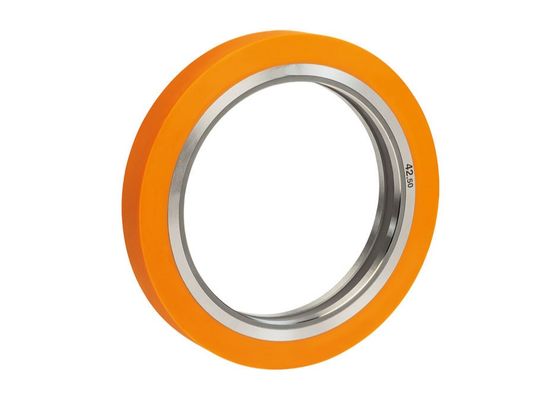
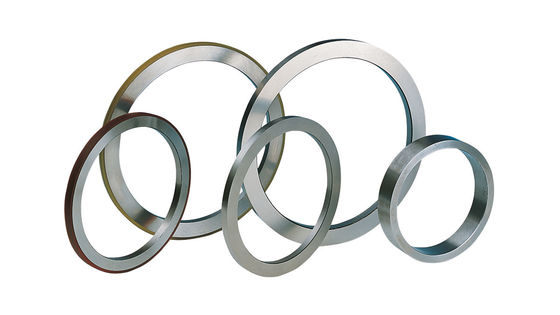
- Rotary slitter blades, steel spacers, PU rings, and adjustment shims
- Trial blades and small-batch trial orders
- Inspection documents and product traceability according to order requirements
- Product, inspection, and packaging confirmation before shipment
What Are Stainless Steel Rotary Slitter Blades?
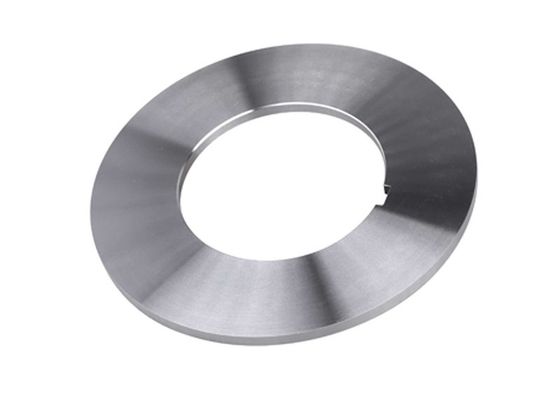
Stainless steel rotary slitter blades are installed on the upper and lower arbors of a metal slitting line. They continuously slit wide stainless steel coils into narrower strips of the required width.
The slitting result does not depend only on how sharp the cutting edge is.
During production, the upper and lower blades form a rotary shearing action through their relative positions, side clearance, and overlap. The final edge quality is also affected by blade material, thickness tolerance, parallelism, flatness, bore fit, arbor condition, and tooling setup.
A complete stainless steel slitting tooling set may include:
- Upper and lower rotary slitter blades
- Precision steel spacers
- PU rings or rubber rings
- Adjustment shims
- Steel stripper rings
- Upper and lower arbors
- Tooling locking components
When burrs increase, cutting edges chip, blades wear unevenly, strip widths vary, or regrinding becomes more frequent, the problem should not immediately be attributed to insufficient blade sharpness.
The cause may also involve knife clearance, accumulated spacer error, arbor runout, locking conditions, or a blade specification that does not match the actual stainless steel slitting conditions.
Special mounting holes, keyways, and installation structures can be evaluated according to the equipment and confirmed drawing.
Stainless Steel Slitting Applications
SENDA stainless steel rotary slitter blades can be manufactured for applications such as:
- Stainless steel coil slitting
- Stainless steel strip slitting
- Precision stainless steel strip processing
- Ultra-thin stainless steel slitting
- Stainless steel service centers
- Continuous metal slitting lines
- Slitting operations requiring controlled burrs and strip-width consistency
Different stainless steel grades have different strength, toughness, work-hardening behavior, and surface-quality requirements.
Even when two blades have the same outer diameter, inner diameter, and thickness, they may not require the same blade material, hardness, or manufacturing solution.
What Information Is Needed for an Initial Inquiry?
You do not need to provide every technical parameter in your first inquiry.
You can usually begin with:
- Blade outer diameter
- Blade inner diameter
- Blade thickness
- Required quantity
- Material being slit
- Material thickness
- Drawing, sample, or existing blade photographs
This information allows us to make an initial assessment of the product type, manufacturing feasibility, possible material direction, and quotation scope.
What Additional Information May Be Needed for Technical Selection?
When further evaluation of blade material, hardness, and precision is required, the following information may be confirmed:
- Specific stainless steel grade
- Material thickness range
- Tensile strength or yield strength
- Required strip width
- Slitting line speed
- Machine or production-line type
- Arbor installation dimensions
- Whether the material is ultra-thin
- Whether production is continuous and high-speed
- Required burr level or edge quality
- Current blade performance
You can still request a quotation when tensile strength, yield strength, or the exact blade failure mechanism is unknown.
You can simply describe what is happening in production, such as:
- Burrs continue to increase
- Cutting edges chip easily
- Blades become dull too quickly
- Burr levels vary between slitting positions
- Blades show one-sided wear
- Strip width is unstable
- Stainless steel surfaces are being scratched
SENDA can use these symptoms to assess whether the issue may be related to blade material, hardness, dimensional precision, clearance, arbor condition, or tooling configuration.
Product Specification Overview
|
Item
|
Customization Options
|
| Product Name |
Stainless Steel Rotary Slitter Blades |
| Related Names |
Stainless Steel Slitting Blades, Circular Slitter Blades, Rotary Slitting Knives |
| Main Application |
Continuous longitudinal slitting of stainless steel coils and strips |
| Material Options |
SKH-51, SENDA SD grades, KL grades, SKD11, HSS, tungsten carbide, and other application-specific materials |
| Outer Diameter |
Customized according to drawing, sample, or equipment conditions |
| Inner Diameter |
Customized according to arbor dimensions and installation structure |
| Thickness |
Customized according to drawing, strip width, and tooling requirements |
| Thickness Tolerance |
Determined according to diameter, thickness, material, and precision requirements |
| Flatness |
Determined according to blade diameter and thickness |
| Parallelism |
Determined according to diameter and order requirements |
| Bore Precision |
Confirmed according to arbor fit |
| Concentricity and Runout |
Confirmed according to the drawing and operating conditions |
| Surface Roughness |
Standard-ground or polished finish |
| Hardness |
Selected according to blade material, stainless steel strength, and slitting conditions |
| Bore Design |
Round bore, keyway, or other customized mounting structures |
| Customization Basis |
Drawings, samples, existing blades, photographs, dimensions, machine information, and operating conditions |
| Supporting Tooling |
Steel spacers, PU rings, adjustment shims, and steel stripper rings |
| Quality Documents |
Inspection and traceability records available according to order requirements |
The final dimensional range, tolerance, hardness, and surface requirements are confirmed after reviewing the drawing or the information currently available.
SENDA customizes the outer diameter, inner diameter, thickness, bore design, and surface finish according to drawings, existing blades, arbor dimensions, and actual slitting conditions.
How Do Stainless Steel Rotary Slitter Blades Work?
Upper and Lower Blades Form a Continuous Rotary Shear
The upper and lower blades are installed on separate knife arbors.
As the stainless steel strip passes between the rotating blades, it is sheared continuously through the relative cutting-edge position, side clearance, and blade overlap.
Even when the cutting edges remain sharp, incorrect blade position or tooling setup can lead to:
- Increased burrs
- Torn or deformed slit edges
- Blade contact or knife collision
- Localized uneven wear
- Cutting-edge chipping
- Strip-width variation
Side Clearance Must Match the Material
There is no single knife-clearance value that is suitable for every stainless steel grade and thickness.
Clearance normally needs to be selected according to:
- Stainless steel grade
- Strip thickness and strength
- Blade material
- Cutting-edge condition
- Required burr level
- Production-line speed
- Arbor and machine condition
Clearance that is too small may increase side pressure, friction, blade contact, and chipping risk.
Clearance that is too large may cause edge tearing, rollover, or larger burrs.
Industry reference percentages can be used as a starting point, but the final setup should be adjusted according to actual trial-slitting results.
Blade Overlap Affects Cutting Load
Insufficient overlap may prevent the material from being fully sheared.
Excessive overlap may increase friction, blade load, abnormal wear, knife contact, and cutting-edge damage.
Side clearance and overlap should be evaluated together with material thickness, material strength, blade geometry, and machine conditions.
Spacers and PU Rings Affect the Complete Tooling Set
Precision steel spacers position the blades and control the required slit width.
PU rings can assist with strip hold-down, material release, tension control, and surface protection.
If spacer thickness errors accumulate, PU rings are unsuitable, or the arbor has excessive runout, the complete tooling set can still produce width variation or inconsistent edges even when individual blades pass inspection.
How Should You Select the Blade Material?
Blade material should not be selected by hardness alone.
For stainless steel slitting, the selected material should balance:
- Wear resistance
- Toughness
- Resistance to edge chipping
- Edge retention
- Dimensional stability
- Heat-treatment stability
- Regrinding frequency
- Total operating cost
SKH-51 and HSS
SKH-51 is a high-speed-steel material direction that may be used for continuous metal slitting applications requiring a balance of wear resistance, edge retention, and toughness.
Possible application directions include:
- Continuous stainless steel strip slitting
- Production lines requiring improved edge retention
- Applications requiring a balance between wear resistance and chipping resistance
The final hardness should be selected according to the exact stainless steel grade, blade thickness, edge geometry, and actual impact conditions.
The same HRC requirement should not be applied to every HSS rotary slitter blade.
SKD11 and Cold-Work Tool Steels
SKD11 may be used for selected conventional stainless steel slitting applications where wear resistance and dimensional stability are important.
When the strip has higher strength, cutting loads are heavier, or the current blades chip frequently, simply increasing hardness may not solve the problem.
The following factors should also be evaluated:
- Blade thickness
- Cutting-edge geometry
- Material toughness
- Heat-treatment route
- Knife clearance and overlap
- Arbor and installation condition
SENDA SD Grades and Other Application-Specific Materials
SENDA can evaluate SD grades, KL grades, and other application-specific materials according to the project conditions.
Selection should consider:
- Stainless steel thickness and strength
- Current blade wear pattern
- Whether edge chipping occurs
- Production-line speed
- Required slit-edge quality
- Current regrinding conditions
- Overall purchasing and operating cost
Customers do not need to determine the most suitable grade themselves.
You can describe the current blade performance and the production problem you want to improve. SENDA can then assess the appropriate material direction based on the actual slitting conditions.
Tungsten Carbide
Tungsten carbide may be used for selected ultra-thin, high-precision, and high-wear-resistance stainless steel slitting applications.
Its typical characteristics include:
- High hardness and wear resistance
- Strong cutting-edge retention
- Suitability for selected small-clearance and precision-slitting conditions
However, tungsten carbide is more sensitive to arbor runout, installation accuracy, abnormal impact, and localized pressure.
When the machine condition or tooling precision is insufficient, selecting tungsten carbide may not improve the slit edge and may instead increase the risk of edge fracture.
SENDA Rotary Slitting Tooling Tolerance Reference
SENDA determines manufacturing precision according to blade diameter, thickness, and structure. One tolerance value should not be applied to every product.
|
Blade Outer Diameter
|
Thickness Tolerance
|
Parallelism
|
Flatness: Thickness ≤1 mm
|
Flatness: Thickness 1–2 mm
|
Flatness: Thickness 2–5 mm
|
Flatness: Thickness >5 mm
|
Standard Surface Roughness
|
Polished Surface Roughness
|
| ≤250 mm |
±0.001 mm |
0.002 mm |
0.02 mm |
0.005 mm |
0.002 mm |
0.002 mm |
Ra 0.2 μm |
Ra 0.1 μm |
| ≤340 mm |
±0.001 mm |
0.002 mm |
0.03 mm |
0.01 mm |
0.005 mm |
0.002 mm |
Ra 0.2 μm |
Ra 0.1 μm |
| ≤420 mm |
±0.001 mm |
0.002 mm |
0.04 mm |
0.02 mm |
0.01 mm |
0.002 mm |
Ra 0.2 μm |
Ra 0.1 μm |
| ≤550 mm |
±0.003 mm |
0.002 mm |
— |
— |
0.02 mm |
0.005 mm |
Ra 0.2 μm |
Confirmed by Order |
| ≤600 mm |
±0.005 mm |
0.005 mm |
— |
— |
— |
0.01 mm |
Ra 0.2 μm |
Confirmed by Order |
Notes on the Tolerance Table
- The table is a manufacturing-capability reference for SENDA precision rotary slitting tools and related components.
- Achievable tolerances depend on material, outer diameter, thickness, product structure, order quantity, and technical requirements.
- Final specifications are subject to the confirmed drawing, order, and production review.
- A thickness tolerance of ±0.001 mm applies only to the corresponding diameter and product conditions shown in the table.
- Flatness is affected by both blade diameter and blade thickness.
- Ra 0.1 μm refers to a polished surface option and is not the standard finish for every blade.
- Bore tolerance, concentricity, runout, keyways, and special mounting structures must be confirmed separately.
- Hardness is selected according to blade material and actual slitting conditions.
How Does Precision Affect Stainless Steel Slitting?
Thickness Tolerance Affects Clearance and Strip Width
When multiple blades and spacers are assembled, the dimensional error of each component can accumulate.
Accumulated error may cause:
- Changes in side clearance
- Strip-width variation
- Different burr levels across the tooling set
- Overall tooling-stack dimensions exceeding the required tolerance
For multi-strip slitting, it is not enough to inspect individual blades. The cumulative dimensions of blades, spacers, and shims must also be controlled.
Parallelism Affects Localized Blade Contact
If the two blade faces are not sufficiently parallel, side clearance may become smaller at a localized position.
This can result in:
- Higher localized contact pressure
- Uneven blade wear
- Contact between upper and lower blades
- Local burr variation
- Abnormal cutting-edge loading
Flatness Affects Face Wobble
Insufficient flatness may cause face wobble when the blade rotates at production speed.
This changes the knife clearance at different rotational positions and may lead to:
- Periodic burr variation
- Localized impact
- Abnormal wear
- Operating noise
- Unstable slit-edge quality
Bore Precision Affects Arbor Fit
A bore that is too loose may cause blade movement, runout, and uneven loading.
A bore that is too tight may create installation difficulties, localized stress, or removal problems.
The bore dimension must be evaluated together with the arbor diameter, surface condition, keyway, and locking method.
Concentricity and Runout Affect Uneven Wear
When the blade center is not aligned with the actual rotational center, the cutting edge may move periodically toward and away from the material.
This can cause:
- Uneven cutting penetration
- One-sided wear
- Periodic burr variation
- Localized edge chipping
- Different wear rates among blades in the same tooling set
Surface Roughness Affects Stainless Steel Surfaces
For polished, decorative, or surface-sensitive stainless steel strips, the condition of the blade face, chamfer, and non-cutting surfaces should also be considered.
A lower Ra value does not automatically guarantee a better slitting result.
Whether a polished finish is necessary depends on the stainless steel surface grade, material path through the tooling, and production requirements.
Common Stainless Steel Slitting Problems and Inspection Directions
Burrs Increase Gradually
Check:
- Cutting-edge wear
- Changes in stainless steel thickness or strength
- Side clearance and overlap
- Arbor and locking condition
- Uneven blade-face wear
When the root cause is arbor runout or tooling error, replacing the blade with a harder material may not solve the burr problem.
Burrs Vary Across the Same Tooling Set
Check:
- Blade thickness variation
- Spacer thickness variation
- Cumulative tooling error
- Blade flatness and parallelism
- Arbor shoulder condition
- Locking pressure and blade arrangement
This type of problem normally requires inspection of the complete tooling set rather than only one blade.
Edge Chipping or Micro-Chipping
Possible factors include:
- Insufficient blade-material toughness
- Excessively high hardness target
- Residual stress after heat treatment
- Edge geometry that does not match the application
- Excessive overlap
- Arbor runout
- Contamination on mounting surfaces
- Weld seams, foreign material, or abnormal impact
When chipping occurs, the location, direction, and frequency of the damage should be analyzed before concluding that it is solely a material problem.
Blades Become Dull Quickly or Require Frequent Regrinding
Re-evaluate:
- Blade-material wear resistance
- Actual stainless steel strength
- Heat treatment and hardness
- Clearance setting
- Slitting-line speed
- Localized friction or abnormal heat
- Cutting-edge wear pattern
Blade life should be compared under the same material, thickness, machine, and slit-edge requirements.
A fixed tonnage or regrinding interval has little practical meaning when operating conditions are different.
Strip Width Is Inconsistent
Check:
- Blade thickness
- Spacer and shim combinations
- Cumulative tooling-stack dimensions
- Arbor shoulder and locking condition
- Strip tracking
- Tension control
Stainless Steel Surfaces Are Scratched
In addition to inspecting the cutting edge, check:
- Whether grinding burrs remain on blade faces
- Whether PU-ring surfaces are damaged
- Whether metal particles are attached to the tooling
- Whether steel spacers are contacting the strip
- The condition of guides and tension components
- The strip path through the tooling set
Manufacturing and Heat Treatment
The production route is selected according to blade material, dimensions, and confirmed order requirements.
Raw Material Preparation, Forging, and Annealing
Raw material is prepared according to the required product size.
Selected materials and blade dimensions may be forged to improve the internal structure and mechanical properties.
Annealing can reduce machining stress and improve the conditions for subsequent manufacturing processes.
Whether forging and annealing are required depends on the selected material and blade dimensions.
Rough Machining and Heat Treatment
Rough machining leaves the appropriate allowance for heat treatment and subsequent precision grinding.
Depending on material and technical requirements, vacuum heat treatment, salt-bath heat treatment, or another suitable process may be selected.
The objective of heat treatment is not simply to produce the highest possible hardness.
It must balance:
- Hardness
- Toughness
- Wear resistance
- Structural stability
- Dimensional-distortion risk
Double Tempering and Stress Relief
Depending on material and process requirements, double tempering and stress-relief treatment may be used to stabilize the material structure and reduce dimensional changes during grinding and service.
The specific temperature, duration, and hardness target are order-specific technical parameters.
Precision Grinding
Precision grinding may include:
- Face grinding
- Bore grinding
- Outer-diameter grinding
- Precision thickness grinding
- Cutting-edge finishing
- Keyway and special-structure machining
These operations control blade thickness, parallelism, flatness, bore size, outer diameter, and arbor fit.
Deburring and Demagnetization
Machining burrs and sharp non-cutting edges are removed after grinding.
Demagnetization helps reduce the attraction of fine metal particles.
For surface-sensitive stainless steel, the cleanliness of the blades and complete tooling set can also affect the material surface.
Manufacturing Process Reference
Raw Material Preparation → Forging or Blanking → Annealing → Rough Machining → Heat Treatment → Tempering and Stress Relief → Precision Grinding → Edge Finishing → Inspection → Marking → Rust Prevention → Packaging
The actual manufacturing route is determined according to blade material, dimensions, and confirmed technical requirements.
Pre-Shipment Inspection and Quality Control
According to the drawing and order requirements, SENDA can inspect the following items.
Material and Hardness
- Material and grade verification
- Hardness inspection
- Heat-treatment requirement confirmation
The hardness result must correspond to the specific blade material and order requirements. One hardness range should not be used to evaluate all blade materials.
Dimensions and Geometric Precision
- Outer diameter
- Inner diameter
- Thickness
- Keyway or special bore structure
- Flatness
- Parallelism
- Concentricity or runout
- Chamfers and mounting structures
Surface and Cutting Edge
- Surface roughness
- Cutting-edge condition
- Machining burrs
- Chipping, scratches, and impact damage
- General product appearance
Marking and Packaging
After inspection, product identification and marking can be applied according to the order requirements.
The blades receive rust-prevention treatment before packaging to reduce the risk of corrosion, collision, and edge damage during transportation and storage.
Quality Documents and Product Traceability
For customers requiring supplier approval, incoming inspection, or batch-quality management, SENDA can provide corresponding inspection documents and traceability records according to order requirements.
Available documents or records may include:
- Material certificate
- Hardness inspection result
- Outer-diameter, inner-diameter, and thickness records
- Flatness and parallelism results
- Surface-roughness records
- Cutting-edge and appearance inspection
- Final inspection records
- Product identification number
- Raw-material batch information
- Heat-treatment or production-batch information
- Product-to-order reference information
The required documents, record format, and traceability depth should be confirmed during the quotation and order-review stage.
This does not mean that every order automatically includes every listed document.
Pre-Shipment Confirmation
Overseas customers cannot always visit the factory for inspection. Pre-shipment confirmation helps identify specification, quantity, marking, inspection, and packaging issues before dispatch.
According to order requirements, SENDA can provide:
- Overall finished-product photographs
- Blade-face and cutting-edge photographs
- Product-identification and marking photographs
- Outer-diameter, inner-diameter, and thickness inspection photographs or videos
- Hardness-testing photographs or videos
- Flatness and parallelism results
- Product quantity and tooling-component confirmation
- Rust-prevention photographs
- Packaging and wooden-case photographs
- Corresponding inspection reports
For a complete tooling set, the specifications, quantities, and packing list of rotary slitter blades, steel spacers, PU rings, shims, and steel stripper rings can also be confirmed.
When third-party inspection is required, inspection items, timing, and process should be agreed in advance. SENDA can cooperate with the specified inspection arrangement.
Start Customization with the Information You Already Have
Different customers have access to different levels of technical information.
SENDA can begin the assessment based on the information currently available.
When You Have a Complete Drawing
Please provide:
- Blade dimensions
- Tolerance requirements
- Material requirements
- Hardness requirements
- Edge or bore structure
- Quantity
- Inspection and documentation requirements
SENDA will review manufacturing feasibility, material, process, and quotation based on the drawing.
The drawing shown is an example of a customized rotary slitter blade. Final dimensions, material, tolerances, and edge structure are subject to the confirmed customer drawing and order requirements.
When You Have an Existing Blade or Physical Sample
You can provide the existing blade or relevant photographs together with:
- Basic blade dimensions
- Material being slit
- Current production problem
- Whether the original specification needs to be replaced directly
Copying the existing blade dimensions alone may not solve current burr, chipping, or service-life problems. Actual performance feedback should also be considered.
When You Only Have Photographs and Manual Measurements
Even without a formal drawing, you can begin by providing:
- Front and side photographs of the existing blade
- Outer diameter
- Inner diameter
- Thickness
- Photographs of keyways or special structures
- Quantity
- Material and material thickness being slit
SENDA can first determine whether further measurement and customization are feasible and then confirm the key technical requirements.
When You Only Have Machine Information and a Production Problem
When no blade drawing or existing blade is available, you can provide:
- Machine or production-line type
- Photographs of the arbor or blade-installation position
- Material being slit
- Material thickness
- Required strip width
- Current burr, chipping, uneven-wear, or width problem
SENDA will assess which dimensions and operating parameters still need to be confirmed.
Custom Manufacturing Process
- Submit drawings, samples, existing blades, photographs, or basic dimensions
- Confirm the preliminary product specification and manufacturing feasibility
- Confirm the material being slit, material thickness, and current production problem
- Supplement machine, arbor, speed, and strip-width information when necessary
- Evaluate blade material, hardness, and structural direction
- Confirm dimensions, tolerances, and tooling relationships
- Complete manufacturing, heat treatment, and precision grinding
- Perform inspection according to order requirements
- Complete pre-shipment confirmation, marking, and packaging
Customers do not need to submit every technical parameter during the first communication.
SENDA will use the available information to identify the parameters that actually affect product selection and manufacturing.
Trial Blades and Small-Batch Trial Orders
For first-time purchases, or when existing blades repeatedly experience burrs, chipping, or unstable service life, trial blades or a small-batch trial order can be arranged.
A trial order can be used to verify:
- Whether blade dimensions fit the arbor
- Whether blade material matches the stainless steel
- Whether hardness and toughness are properly balanced
- Whether the cutting-edge structure matches the slitting method
- Slit-edge and burr condition
- Blade wear pattern
- Whether chipping or uneven wear occurs
- Compatibility with spacers and PU rings
Small-Batch Validation Process
- The customer submits the drawings, existing blade, photographs, or dimensions currently available
- SENDA conducts an initial assessment
- Both sides confirm the key operating conditions affecting the trial
- The trial-blade or small-batch quantity is confirmed
- Material, precision, and manufacturing requirements are agreed
- Production and pre-shipment inspection are completed
- The customer performs a trial on the actual production line
- Burr, wear, chipping, and installation feedback are collected
- The solution is reviewed and adjusted when necessary
- After confirmation, the project moves to batch production
Customers are not required to diagnose every technical cause before the trial order.
They can begin by describing the current production symptoms and then use trial feedback to refine the material or process solution.
Trial results should be compared under the same or similar material, speed, clearance, and machine conditions. Changing several production variables at the same time may make the result difficult to evaluate.
Batch Consistency and Repeat Orders
For blades used in the same tooling set or supplied in one batch, the following consistency factors should be controlled:
- Blade thickness
- Hardness
- Outer diameter and bore size
- Flatness and parallelism
- Material and heat-treatment batch
- Cumulative tooling-stack error
Blades manufactured in one batch require control of thickness, outer and inner diameter, flatness, parallelism, hardness, and cumulative tooling-stack error.
For repeat orders, SENDA can refer to the previously confirmed drawing, material, process, and inspection requirements to support continuity between production batches.
Any requested change to material, hardness, tolerances, or manufacturing process should be reconfirmed before production.
Custom Project Record: Ø315 × Ø200 × 20 mm Stainless Steel Slitter Blades
A stainless steel slitting project required 20 rotary slitter blades.
Project Conditions
- Blade size: Ø315 × Ø200 × 20 mm
- Quantity: 20 pieces
- Blade material: SD-36
- Material being slit: SUS 200, 300, and 400 series stainless steel
- Material thickness: 3–6 mm
- Customer requirement: determine a suitable blade hardness according to the actual slitting conditions
The project covers several stainless steel series and a material thickness range of 3–6 mm.
The strength and work-hardening characteristics of different SUS grades are not identical. Therefore, blade hardness should not be determined only from blade size or the general SUS series.
Further evaluation of hardness and manufacturing conditions should consider:
- Specific stainless steel grade
- Actual material strength
- Production-line speed
- Side clearance and overlap
- Current blade wear pattern
- Whether the primary problem is edge rolling, rapid wear, or chipping
When the customer cannot provide every parameter initially, SENDA can begin with the available slitting conditions and confirm the critical information during the technical review.
The blade outer diameter falls within the ≤340 mm category of SENDA’s manufacturing reference table, and its thickness falls within the >5 mm category.
The corresponding precision values can be used as a manufacturing reference. Final requirements are subject to the confirmed order drawing and technical specification.
This is a real custom-project record showing how SENDA evaluates a product according to its dimensions and slitting conditions. It does not claim unrecorded service-life or slit-edge improvements.
Complete Stainless Steel Slitting Tooling
In addition to individual rotary slitter blades, SENDA can provide related tooling components according to tooling-set requirements.
Rotary Slitter Blades
Rotary slitter blades are the primary shearing components. Their material, hardness, and precision should be selected according to the stainless steel application.
Precision Steel Spacers
Steel spacers control blade position and required strip width.
When several spacers are used in one tooling set, thickness consistency and cumulative dimensional error should be considered.
PU Rings
PU rings assist with strip hold-down, release, tension control, and material-surface protection.
Their hardness, width, and surface condition should match the material and tooling configuration.
Adjustment Shims
Adjustment shims are used for fine adjustment of tooling spacing and assembly dimensions.
Shims cannot replace correct blade and spacer tolerances.
Steel Stripper Rings
Steel stripper rings may be used for selected narrow-strip or ultra-narrow-strip slitting and material-release applications.
A complete tooling solution should be confirmed according to arbor dimensions, required strip widths, blade quantity, and cumulative-error requirements.
Regrinding and Maintenance
When Professional Regrinding May Be Considered
- The cutting edge shows normal and uniform wear
- The blade gradually becomes dull
- Burrs increase gradually during use
- The cutting edge has minor and controllable defects
- Sufficient regrinding allowance remains
- The blade body has no obvious deformation
When the Blade Should Be Evaluated for Replacement
- Visible cracks
- Deep edge chipping
- Extensive cutting-edge damage
- Blade-face deformation
- Bore damage
- Severe localized overheating
- The blade can no longer meet tooling dimensions after regrinding
Recommended Inspection After Regrinding
- Thickness
- Outer diameter
- Parallelism
- Flatness
- Cutting-edge condition
- Outer-diameter consistency within the tooling set
- Fit with spacers and arbors
Regrinding is not only about restoring a sharp cutting edge. The blade must still satisfy the dimensional and installation requirements of the original tooling set.
Storage and Installation
- Keep blades dry and protected against rust
- Prevent cutting edges from contacting each other directly
- Use suitable protection during handling
- Clean the arbor, bore, and blade faces before installation
- Inspect spacers and PU rings for damage
- Avoid uneven localized locking pressure
- Do not change clearance and overlap without suitable technical experience
What Services Can SENDA Provide?
In addition to manufacturing stainless steel rotary slitter blades, SENDA can provide the following support according to project and order requirements:
- Blade customization based on drawings, samples, existing blade photographs, or basic dimensions
- Material and hardness selection support according to the stainless steel grade and slitting conditions
- Analysis of burrs, edge chipping, uneven wear, and strip-width variation
- Precision steel spacers, PU rings, shims, and related slitter tooling
- Trial blades and small-batch trial orders
- Professional regrinding and blade-condition evaluation
- Inspection documents, product traceability, and pre-shipment confirmation according to order requirements
Frequently Asked Questions
Which material should be used for stainless steel slitter blades?
The selection depends on stainless steel grade, thickness, strength, line speed, burr requirements, and the current blade problem.
Possible material directions include HSS, SKD11, SENDA SD grades, KL grades, and tungsten carbide.
There is no single material that is best for every stainless steel slitting application.
Can I request a quotation without knowing the tensile strength?
Yes.
You can first provide the stainless steel grade, material thickness, blade dimensions, and current production problem.
When material strength is necessary for the next selection stage, SENDA can confirm it with you or evaluate it using the available material information.
Can SENDA manufacture the blade without a complete drawing?
You can begin by providing an existing blade, blade photographs, manually measured dimensions, machine photographs, or arbor information.
It is recommended to provide at least the outer diameter, inner diameter, thickness, quantity, material being slit, and material thickness.
SENDA will review the available information and confirm whether a drawing, sample, or additional parameters are required.
Can an existing blade be copied directly?
The existing blade can be measured and evaluated, but copying the dimensions alone may not solve the current problem.
When the existing blade has burr, chipping, uneven-wear, or frequent-regrinding issues, actual operating feedback should also be provided so that material, hardness, and precision can be reassessed.
How should SKH-51 and SKD11 be selected?
SKH-51 is an HSS material direction commonly considered where wear resistance, edge retention, and a degree of toughness are required in continuous slitting.
SKD11 may be used for selected conventional stainless steel slitting applications where wear resistance and dimensional stability are important.
The final selection depends on the actual wear pattern, chipping risk, and production conditions.
Is tungsten carbide suitable for stainless steel slitting?
It can be suitable for selected ultra-thin, high-precision, and high-wear-resistance applications.
However, tungsten carbide is more sensitive to arbor runout, installation accuracy, and abnormal impact. It should not be treated as the default material for every stainless steel slitting application.
Does ±0.001 mm apply to every rotary slitter blade?
No.
A tolerance of ±0.001 mm applies only to the corresponding outer-diameter, thickness, and product conditions.
As diameter increases, the available thickness tolerance may change. Flatness also depends on blade thickness.
The final tolerance is subject to technical review and the confirmed drawing.
Why do burrs increase during stainless steel slitting?
Common factors include cutting-edge wear, clearance changes, unsuitable overlap, blade flatness or parallelism, changes in material strength, and abnormal arbor conditions.
When burr levels differ between slitting positions, spacers and cumulative tooling error should also be checked.
Can SENDA supply spacers and PU rings together with the blades?
Yes. Rotary slitter blades, precision steel spacers, PU rings, adjustment shims, and steel stripper rings can be supplied according to tooling requirements.
The complete tooling set should be confirmed according to arbor dimensions, number of blades, required strip widths, and cumulative-error requirements.
Can SENDA provide inspection reports and product traceability?
Corresponding inspection documents and traceability records can be provided according to the order and customer quality requirements.
The required document types, inspection items, and record format should be confirmed during the quotation and order-review stage.
Are trial blades or small-batch orders available?
Trial blades or a small-batch trial order can be arranged according to the project.
After the customer completes the production-line trial, the material, precision, or manufacturing solution can be reviewed using burr, wear, chipping, and installation feedback.
What is the MOQ?
MOQ depends on blade dimensions, material, quantity, heat-treatment route, precision, and whether special supporting tooling is required.
Trial blades, small-batch orders, and batch orders can be evaluated separately.
Please submit the required specifications and quantity for confirmation.
How Is Production Lead Time Determined?
Lead time depends on:
- Whether material requires special purchasing
- Blade dimensions and quantity
- Heat-treatment route
- Precision and inspection requirements
- Whether spacers, PU rings, or other tooling components are included
- Whether third-party inspection is required
The formal lead time is provided after the drawing, material, and order requirements are confirmed.
Are Standard Blades Available from Stock?
Most stainless steel rotary slitter blades are customized according to the machine, arbor, and required strip width.
Available blanks, common materials, or similar specifications should be checked according to actual inventory at the time of inquiry.
When Should a Blade Be Reground or Replaced?
Professional regrinding may be considered when the edge shows normal wear, gradually becomes dull, and the blade body remains in good condition.
When the blade has cracks, severe chipping, bore damage, or face deformation, it should first be evaluated to determine whether regrinding remains practical.
Why Choose SENDA?
Since 1998, SENDA has focused on industrial knives and metal slitting tooling manufacturing and application support.
Our manufacturing capabilities include CNC machining, internal and external cylindrical grinding, precision surface grinding, heat treatment, and dimensional inspection.
Based on actual slitting conditions, SENDA can support customers with custom rotary slitter blades, related tooling components, trial orders, inspection documents, and production-problem analysis.
Request a Custom Quote for Stainless Steel Rotary Slitter Blades
You do not need to provide every technical parameter in the first inquiry.
You can begin by submitting a drawing, sample, existing blade photograph, or basic dimensions. We will review the available information and confirm which additional parameters are required.
Step 1: Provide Basic Information
Please provide:
- Blade outer diameter
- Blade inner diameter
- Blade thickness
- Required quantity
- Material being slit
- Material thickness
- Drawing, sample, or existing blade photographs
Step 2: Supplement Technical Information When Required
When further material selection or production-problem analysis is necessary, the following may be confirmed:
- Specific material grade
- Material thickness range
- Tensile strength or yield strength
- Required strip width
- Slitting speed
- Machine or production-line type
- Arbor installation dimensions
- Whether the material is ultra-thin
- Whether production is continuous and high-speed
- Current blade material
- Current usage or regrinding condition
- Burr, chipping, uneven-wear, or width problem
- Required dimensional precision and slit-edge quality
Step 3: Confirm Tooling and Quality Requirements
Please indicate whether the order should include:
- Precision steel spacers
- PU rings or rubber rings
- Adjustment shims
- Steel stripper rings
- A complete slitting tooling set
- Material certificate
- Inspection report
- Batch traceability
- Pre-shipment photographs or videos
- Third-party inspection
You Can Begin Without a Complete Drawing
You can first provide:
- An existing blade or blade photographs
- Manually measured outer diameter, inner diameter, and thickness
- Machine or arbor photographs
- Material and material thickness being slit
- Current production problem
SENDA can conduct an initial assessment using this information and then confirm the critical parameters affecting selection and manufacturing.


 Your message must be between 20-3,000 characters!